
Step 1 · Frame the project · OBSERVATION
The developer frames the project. Claude takes it in and starts a fresh thread. Neonmem stores the project's first memory.
 Neonmem
Building a small game with the agent — every decision, dead-end and recall, captured as it happens.
A real run — every screenshot is the agent's live memory after that step.
The developer frames the project. Claude takes it in and starts a fresh thread. Neonmem stores the project's first memory.

The developer describes how rooms work. Claude notes the model. Neonmem keeps the detail beside the project.

The developer raises an open question. Claude holds it open instead of guessing. Neonmem records the question so it isn't lost.

The developer floats an idea. Claude treats it as a hunch to test. Neonmem files it as a hypothesis.

The developer opens a real debate. Claude lays out both sides. Neonmem starts a debate thread to hold the tension.

The developer gives points for and against. Claude weighs them. Neonmem links each argument to the debate.
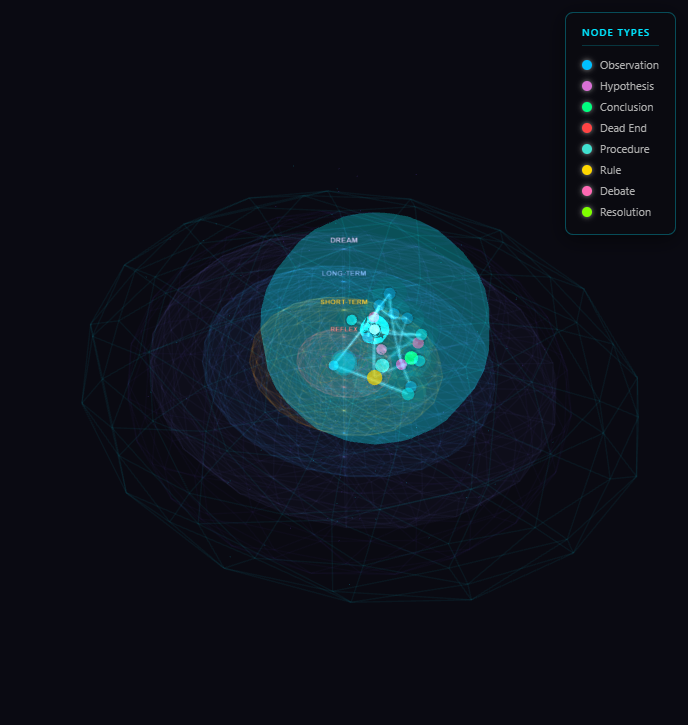
The developer decides. Claude commits to the call. Neonmem stores the resolution where it won't fade.

The developer asks for code. Claude writes the first version. Neonmem logs the action taken.

The developer confirms it works. Claude validates the approach. Neonmem records the conclusion as settled.

The developer flags a past failure. Claude marks it clearly. Neonmem stores a permanent dead-end so it's never tried again.

The developer turns the lesson into a rule. Claude adopts it. Neonmem pins the rule close to the core.

The developer records a repeatable procedure. Claude captures the steps. Neonmem stores the how-to for next time.

The developer sets a standing principle. Claude internalizes it. Neonmem keeps it as a reflex at the centre.

The developer asks why. Claude answers from memory, not a guess. Neonmem surfaces the original decision.

The developer almost repeats a mistake. Claude warns it's a known dead-end. Neonmem flags the recorded failure.

The developer asks what happened today. Claude replays the day in order. Neonmem returns it by time, not from imagination.

The developer asks for the standing rule. Claude recalls the reflex instantly. Neonmem hands it back word for word.

The developer wraps up. Claude runs a consolidation. Neonmem merges the noise and keeps the decisions, dead-ends and rules.